
Let’s be honest.
Most people don’t buy the way we think they do.
They don’t carefully compare every feature.
They don’t read every product description.
And they rarely take a brand’s word at face value.
What they actually trust is other people.
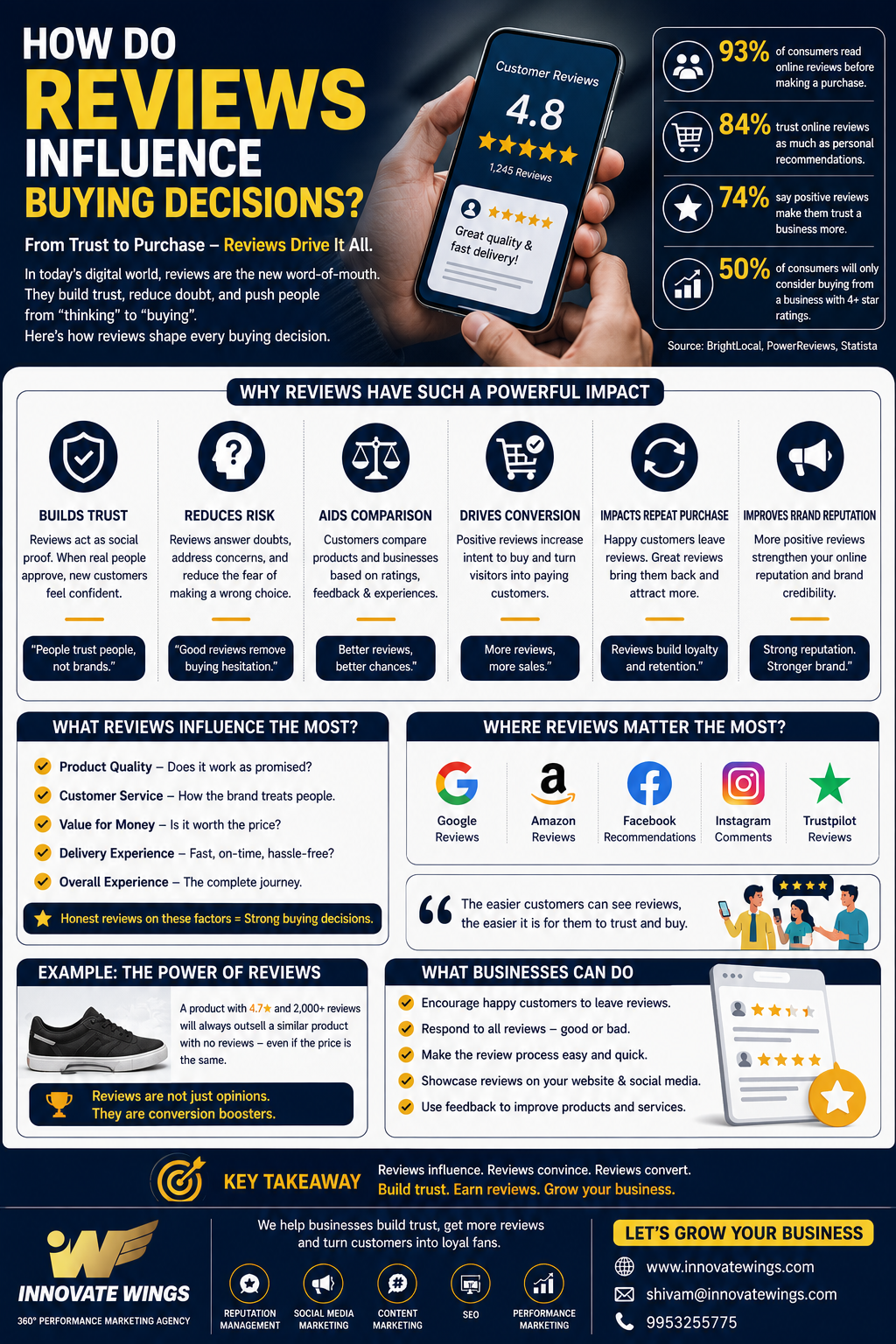
That’s why reviews matter so much.
A few stars. A short comment. Someone saying “this worked for me.”
That’s often enough to make someone buy — or walk away.
Here’s how it usually plays out in a buyer’s mind.
“Is this risky?”
Every purchase comes with some uncertainty.
Will this actually work?
Will the service be reliable?
Will I regret spending the money?
Reviews help answer those questions.
When people see that others bought it and were happy, the risk feels lower.
When they see the same complaints repeated, the risk feels higher.
That small shift is often enough to decide.
“Who should I believe?”
This is the real reason reviews work.
A brand can say “We’re the best” or “Customers love us.”
But a real customer saying the same thing carries more weight.
People know the brand has a reason to sound positive.
Other buyers usually don’t.
That’s why so many of us skip the shiny homepage and go straight to the reviews.
“Are other people using this?”
We’re wired to look at what others are doing.
If lots of people have bought something and rated it highly, it feels safer to try.
A product with dozens of strong reviews feels more reliable than one with none — even if the second product is better on paper.
It’s not always logical. But it’s very human.
What makes a review convincing?
“Great product!” helps a little.
But reviews that share real details are much stronger:
- How long they’ve used it
- What problem it solved
- What they liked or didn’t like
- Whether they’d buy again
Those details make the review feel genuine instead of generic.
What about negative reviews?
Most businesses fear them.
But a complete lack of criticism can sometimes feel suspicious.
A few honest, balanced negative reviews can actually build trust — as long as the overall rating is still strong and the business responds calmly.
What really damages trust is a pattern of unresolved problems or defensive replies.
Sometimes a thoughtful response to a critical review does more good than ten perfect five-stars.
Reviews also set expectations
They don’t just help people decide whether to buy.
They tell customers what to expect.
If many people mention fast delivery or good support, new buyers start expecting that.
When the business delivers, satisfaction goes up.
When it doesn’t, disappointment hits harder.
How people actually use reviews
Most buyers don’t read every single one.
They usually:
- Check the overall rating
- Look at recent reviews
- Read a few positive ones
- Check a couple of critical ones
- Look for patterns
They’re searching for reassurance or warning signs, not doing deep research.
That’s why recent activity and consistency matter.
What this means for small businesses
Reviews are no longer optional.
They affect:
- Whether someone trusts you enough to enquire
- Whether they choose you over a competitor
- Whether they feel confident enough to buy
- Whether they come back or recommend you
If you have few or no reviews, you’re asking people to take a bigger leap of faith than they need to.
Simple ways to get better reviews
You don’t need a complicated system.
1. Make it easy for happy customers to leave a review
2. Ask soon after a positive experience
3. Reply to both positive and negative reviews
4. Show real reviews on your website and sales pages
5. Pay attention to patterns and improve the actual experience
The goal isn’t perfect five-star ratings.
It’s building evidence that real people have trusted you and been happy.
The real point
Reviews influence buying decisions because they reduce uncertainty and give social proof from people who’ve already taken the risk.
In a market full of options, that kind of reassurance is often the difference between being chosen and being scrolled past.
Innovate Wings — your business growth strategy agency — helps small and growing businesses turn customer experiences into stronger trust and better conversion.
We boost sales and build a strong lead funnel with digital growth strategies. Using platforms like Facebook, Instagram, LinkedIn & Google Ads to build recurring leads and sales.

