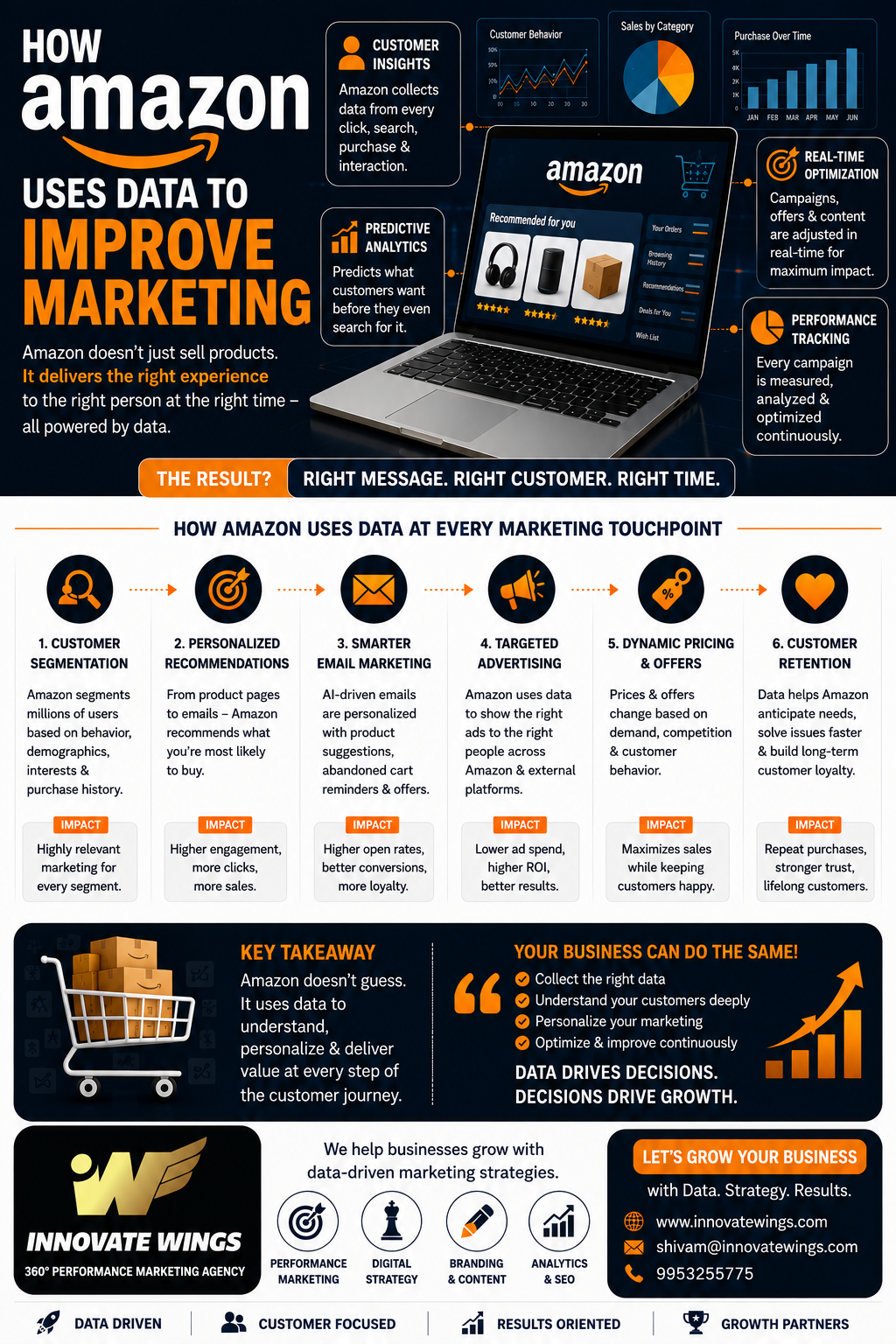

Most businesses still treat marketing like a guessing game.
Write some ads.
Post on social media.
Hope something works.
Amazon doesn’t do that.
It watches what people actually do — and then lets that behaviour shape almost every marketing decision. Every search, scroll, click, add-to-cart, and purchase becomes a signal. Over time, those signals tell a very clear story about what people are likely to buy next.
You don’t need Amazon’s scale to learn from this. You just need to borrow the mindset and apply it in smaller ways.
Behaviour > Opinions
Amazon cares far more about behaviour than opinions.
Surveys and feedback have their place, but they’re not the main driver. What really matters is what customers actually do.
Questions Amazon’s systems are effectively asking all the time:
- What did this person search for?
- Which products did they click?
- How long did they stay on a page?
- Did they add something to the cart and then remove it? - What did they eventually buy instead?
People often say one thing and behave differently. Behaviour reveals intent. That’s why Amazon leans on actions, not just what people claim they want.
For a smaller business, this can be as simple as:
- Watching which pages people visit most
- Tracking which buttons they click
- Noticing where they consistently drop off
You’ll often spot patterns that your gut would have completely missed.
Personalisation That Feels Relevant
When you open Amazon, it rarely feels random.
The homepage doesn’t look exactly the same as it did for your friend. The “Recommended for you” section is based on what you’ve looked at before. Even the emails you get tend to match your past purchases and browsing.
The goal is simple:
Show people things they’re actually likely to care about.
Higher relevance usually leads to better click-through rates, better conversion rates, and less wasted ad spend. For a smaller business, this doesn’t need to be complicated:
- If someone browses “home cleaning services,” send follow-up content about that, not random other offers.
- If a customer bought a certain product, suggest the next logical item, not something unrelated.
- Segment your email list by interest or category instead of blasting the same message to everyone.
Even small, basic personalisation often feels surprisingly powerful to the customer.
Testing Is Built Into the Culture
Amazon doesn’t assume it knows the perfect headline or image forever.
It runs experiments all the time. Different product photos, different wording, different placements for recommendations, different layouts.
They measure what actually performs better — then they keep the winners and quietly retire the losers.
This means their marketing isn’t frozen in time. It’s evolving.
For smaller businesses, “testing” doesn’t have to mean hiring a data scientist. It can look like:
- Trying two versions of a landing page and seeing which converts better.
- Testing two ad headlines with a small budget.
- Trying two email subject lines and watching the open rates.
The important part isn’t having perfect tools. It’s having the habit:
“Let’s test this instead of just assuming.”
Data Decides What Gets Promoted
Amazon doesn’t push every product equally.
It uses data to decide where to put its energy.
Products with strong signals — good reviews, high conversion rates, consistent search demand — get more visibility and recommendation slots.
In simple terms: they double down on what’s working.
For smaller businesses, this can mean:
- Look at which offers or services already convert well.
- Promote those more often.
- Build campaigns around your proven winners instead of spreading effort thin across everything.
You don’t have to treat all products as equal. Your customers don’t.
Marketing Isn’t an Island
On Amazon, marketing doesn’t live in a separate silo.
When a product starts selling more because recommendations are working or a campaign clicks, that performance data loops back into inventory planning, pricing decisions, and which variations or bundles to create next.
Data doesn’t just live in reports. It drives real decisions across the business.
For a smaller business, this might look like:
- If a service suddenly gets more interest, plan staffing and capacity accordingly.
- If one product is constantly sold out, adjust stock or pricing based on that demand.
- If certain offers always get poor response, consider retiring or repositioning them instead of pushing harder.
The idea is to connect marketing results to operations, not treat them separately.
What Small Businesses Can Actually Copy
You don’t need Amazon’s infrastructure to apply these principles.
Here’s a simple version of their playbook you can use:
1. Watch real behaviour
Use analytics to see what people click, where they drop off, and which pages they ignore. Treat this as truth, not just your assumptions.
2. Add basic personalisation
Segment emails based on interest or category. Show returning visitors something relevant to their last visit. Follow up based on what people looked at or bought.
3. Test small things regularly
Headlines, buttons, images, offers. Use simple A/B tests inside your email tool, ad platform, or website builder.
4. Back your winners
See which products or services convert best. Promote those more. Build content and campaigns around them.
5. Follow the full journey
Don’t stop at clicks. Track from first visit to repeat purchase whenever possible. Look for drop-off points and fix them.
The guiding idea is straightforward:
Better data → better decisions → better results (especially over time).
Innovate Wings — your business growth strategy agency — helps small and mid-size businesses turn existing customer behaviour into usable insights, add simple personalisation, set up lightweight testing, and focus effort on the offers that already work best.
We boost sales and build a strong lead funnel with digital growth strategies. Using platforms like Facebook, Instagram, LinkedIn & Google Ads to build recurring leads and sales.

